Baseball moneylines are the most misunderstood bet in sports. Unlike football or basketball spreads — where you're always risking roughly -110 — MLB moneylines can range from -300 on a heavy favorite to +250 on a big underdog. That range creates real opportunities, and real traps.
This guide covers the specific factors that drive value in MLB moneyline betting: pitching, park factors, lineup construction, and how the market prices games differently than public perception.
Why MLB Moneylines Are Different
In football and basketball, point spreads normalize the vig across games. Bet the Chiefs -7.5 or the Raiders +7.5 — you're paying roughly the same juice either way.
Baseball doesn't work like that. Every game has its own moneyline spread determined by run expectancy, pitching matchups, and ballpark. The vig structure is asymmetric — and that asymmetry is where value hides.
A -150 favorite requires you to win 60% of bets to break even. A +130 underdog only needs a 43.5% win rate to be profitable. The math strongly favors finding undervalued underdogs over laying big prices on favorites.
The Starting Pitcher: The Single Biggest Factor
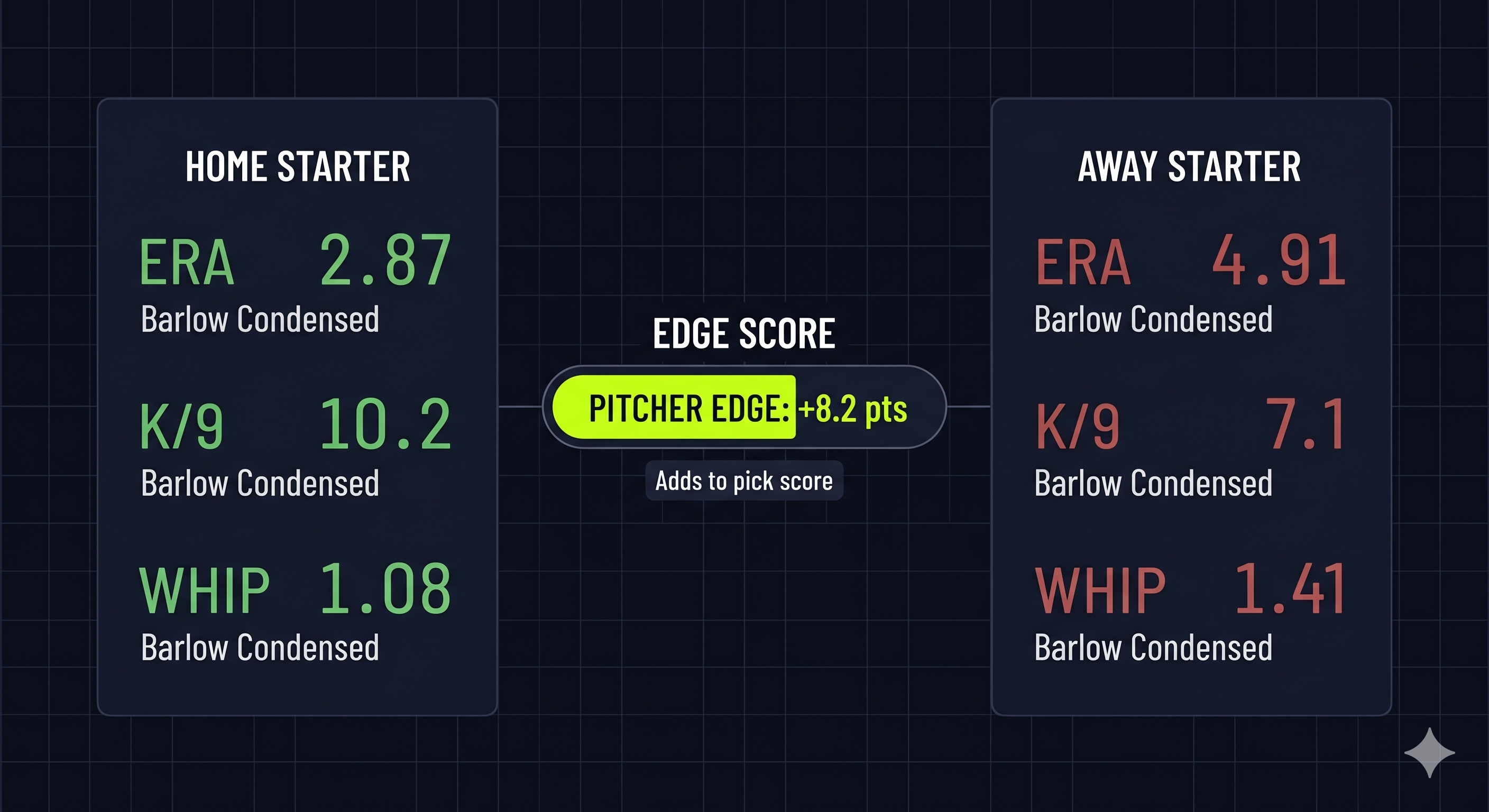
No other sport has a single player influence an outcome as heavily as a starting pitcher influences a baseball game. An elite starter (sub-3.00 ERA, high strikeout rate) versus a replacement-level arm can swing the implied win probability by 15–20 percentage points.
This creates three actionable situations:
1. Ace vs. Struggling Starter
When a top pitcher faces a team with a struggling or unannounced starter, the market often underweights the pitching edge — especially mid-week games that don't attract heavy public attention. These are the spots where ZachAI's pitcher edge scoring finds consistent value.
2. The "Starter Gets Scratched" Risk
This is the most dangerous scenario for moneyline bettors. You bet a team at -130 because their ace is pitching. Three hours later, the ace is scratched with forearm tightness. The line moves to -105. You're stuck with a bet priced for a different game.
Every pick includes a minimum playable price. If the line moves significantly after release — often because of a lineup or pitching change — the minimum price tells you when the original edge is gone. Do not chase a bet past that line.
3. The Bullpen Game
Teams increasingly use "opener" strategies — a reliever throws two innings, then a bulk arm takes over. Markets often misprice these games, either overvaluing the opener's name or underestimating the bullpen depth. When ZachAI flags "no pitcher context," it's often because a team hasn't announced their starter — that uncertainty should reduce your bet size or eliminate the play entirely.
Park Factors: The Hidden Edge Most Bettors Ignore
Every MLB ballpark plays differently. Coors Field in Denver inflates run totals by 25–30% compared to a neutral park. Oracle Park in San Francisco suppresses offense. These effects are well-documented but consistently underweighted by the public.
| Park Type | Effect on Totals | Moneyline Impact | Strategy |
|---|---|---|---|
| Hitter's park (Coors, Great American) | Inflates runs +15–30% | Pitching edge shrinks | Fade strikeout-heavy pitchers |
| Pitcher's park (Oracle, Petco) | Suppresses runs 10–20% | Pitching edge amplified | Boost elite starters further |
| Neutral park (most MLB parks) | Minimal adjustment | Use raw stats | Focus on matchup |
The most common mistake bettors make is applying a pitcher's road ERA to a home start at Coors — or vice versa. Always check whether the park adjusts the edge up or down before finalizing a bet.
Run Production: The Anemic Offense Trap
This is one of the most reliable edges in MLB betting and one ZachAI specifically models. Some teams simply don't score runs. When you're backing a team on the moneyline, you need them to win — and a team averaging 3.2 runs per game is structurally harder to win with than a team averaging 4.7.
Season RPG: 3.1 (bottom 5 in MLB)
Price: +160 underdog
Opponent pitcher ERA: 2.9
Model verdict: ANEMIC_DOG_ML violation — skip
Large underdog + weak offense + quality opponent starter = market pricing the loss, not value
The +160 price looks tempting. But the market is offering that price because the White Sox don't score runs — it's fair value for a bad team, not an edge. ZachAI blocks these picks with the ANEMIC_DOG_ML violation.
Line Shopping Is Non-Negotiable in MLB
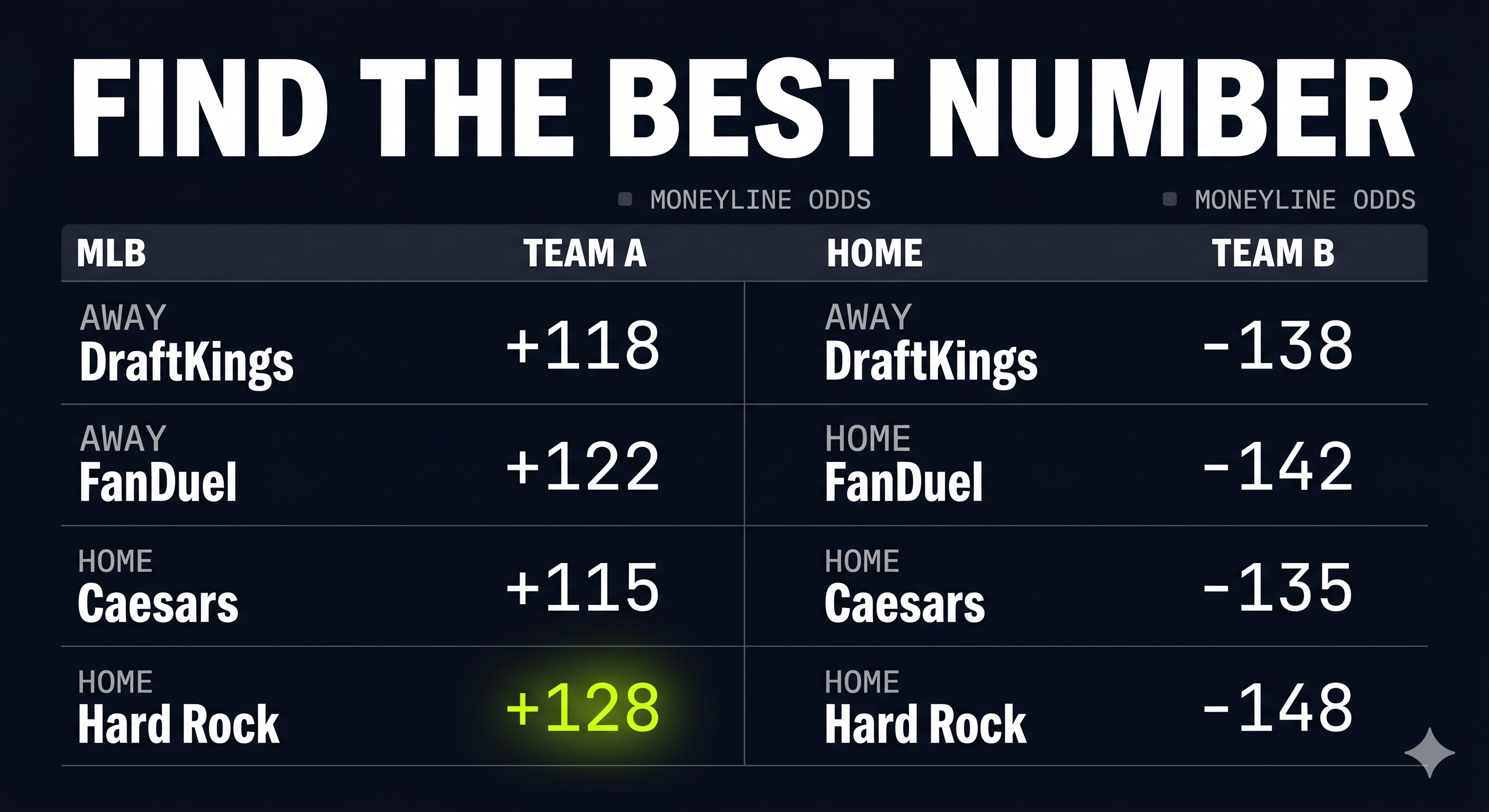
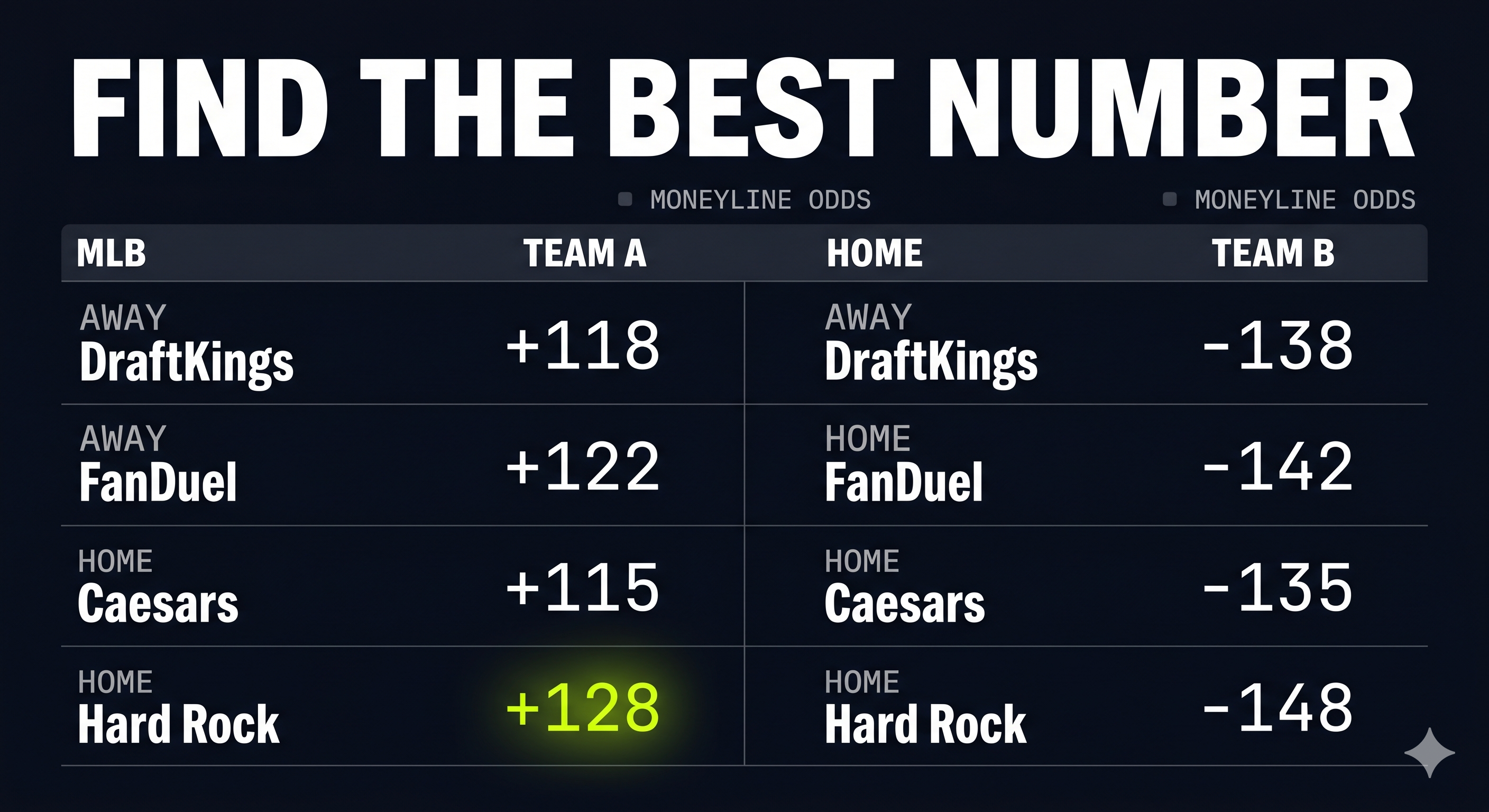
MLB moneyline discrepancies across books are larger than any other major sport. On any given game you might see:
DraftKings: +128
FanDuel: +122
Caesars: +119
Hard Rock: +125
Best available: +128 vs market avg: +123.5
Edge from line shopping alone: +4.5 cents
That 4.5-cent edge from simply using the right book is free money. Over a full MLB season of 30–40 bets, that difference compounds into real profit — without any additional analytical edge required.
When to Bet Underdogs vs. Favorites
The general principle: in baseball, underdogs have positive long-term expected value as a category. This is because the public systematically overvalues favorites — they bet on popular teams, front-runners, and name pitchers regardless of price.
But not all underdogs are equal. The value is in qualified underdogs:
- +100 to +150 range — the most consistent value zone. Enough upside to overcome the vig without requiring the team to be a massive long shot.
- Strong or neutral pitcher matchup — not a case where you're taking an underdog because their ace is good, only to have him scratched pre-game.
- Reasonable run production — at least 3.8 RPG. Betting big underdogs on teams that don't score is a losing long-term proposition.
- Market movement in your favor — if the line moved from +130 to +140 since open, the market confirmed the edge. If it moved from +160 to +140, something changed and the market is pricing the game differently than when you identified the value.
The ZachAI MLB Model in Practice
When ZachAI evaluates an MLB moneyline, the score combines six factors in weighted order:
- Pitcher edge — ERA, strikeout rate, WHIP matchup between starters
- Market movement — did the line move toward or away from our side since open?
- Book consensus — do 4+ books agree on the side and number?
- Run production — RPG for both teams, with penalties for anemic offenses
- Price edge — best available price vs. market average
- Situational factors — day game B2B, road series finale, rest disadvantage
A pick needs to clear a minimum score of 68+ to be released. Most games on any given MLB slate don't clear that bar — which is why PASS days happen and why they're intentional, not failures.
MLB moneyline value comes from four sources: pitching edges, park adjustments, qualified underdogs in the +100–150 range, and line shopping across books. All four working together on the same game is when ZachAI releases with highest confidence.